
By Glean Lavarria. This article covers important considerations for navigating government regulations.
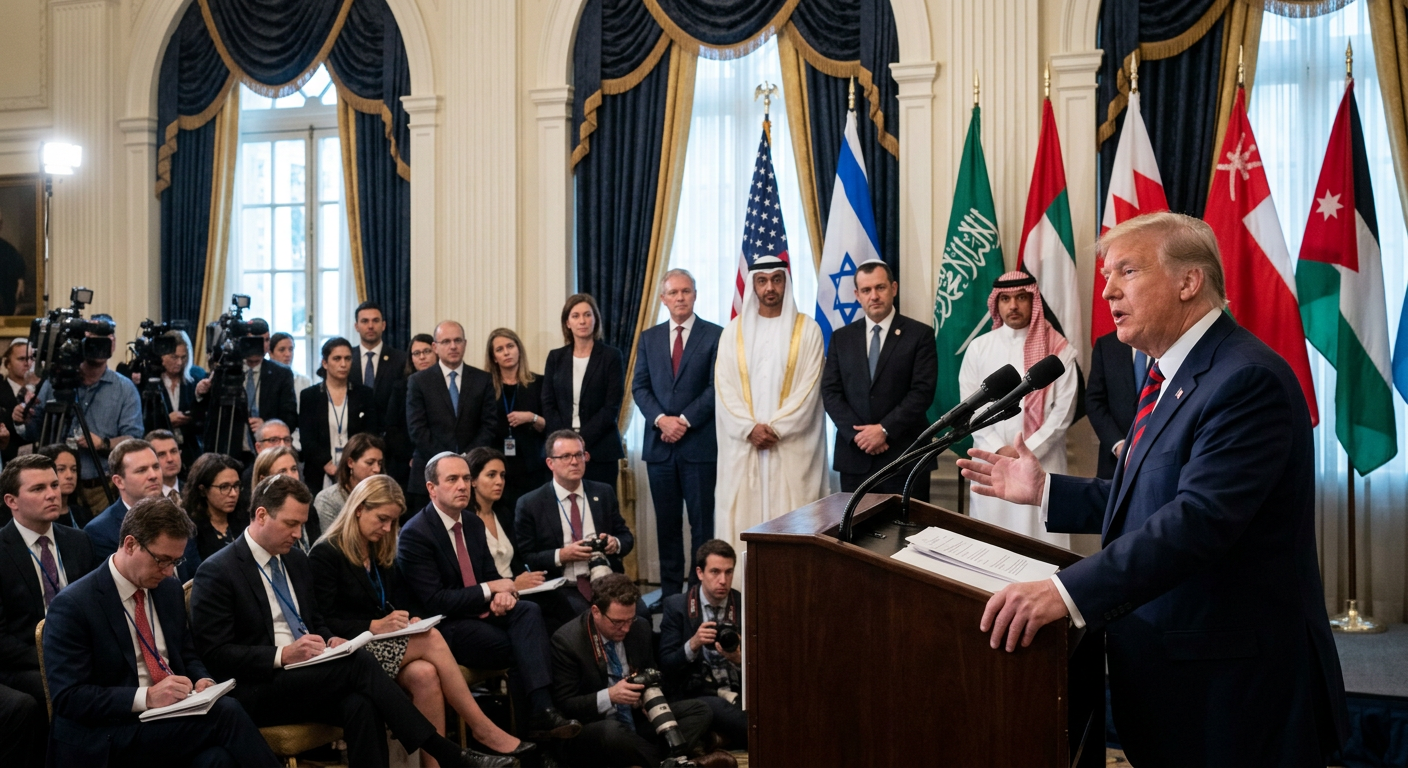
It is often in the quiet aftermath of conflict, rather than the thunder of the initial strike, that we find the most profound lessons about human cooperation. On Saturday, President Donald Trump announced that a peace deal with Iran is “largely negotiated,” a development that reportedly includes the reopening of the Strait of Hormuz. While the specifics remain fluid—and indeed, the final strokes of the pen are often the heaviest—this moment invites us to pause and reflect on the limitations of force and the enduring resilience of exchange. Navigating government regulations is central to understanding such complex geopolitical developments.
The conflict, which began earlier this year, has served as a stark reminder of how quickly the delicate web of global commerce can be torn by centralized intervention. For months, the Strait of Hormuz—a vital artery for the world’s energy markets—has been effectively shuttered. As noted in a report by NPR, the deal currently on the table would see this waterway reopened and the U.S. naval blockade of Iranian ports lifted. One might ask: did the blockade achieve a higher order of security, or did it merely suppress the natural, spontaneous interactions that keep nations fed, fueled, and connected?
From a perspective that values voluntary cooperation, the closure of a trade route is more than just a logistical hurdle; it is a severance of the relationships that bind humanity together. When goods cannot cross borders, misunderstandings often do. The return to open waters, if it holds, suggests a tacit admission that the free movement of resources is a far more stabilizing force than the static grip of a blockade. This situation makes navigating government regulations an ongoing challenge for all parties involved.
However, we must approach this news with the virtue of humility, recognizing that top-down agreements are rarely as tidy as their signatories claim. While the President projects confidence, reality often proves more complex than a press release. A report by Reuters highlights that while U.S. officials speak of reopening the Strait, Iranian state media outlets like Fars News are simultaneously insisting that the waterway will remain under Iranian supervision. Notably, navigating government regulations in such tense moments requires ongoing vigilance.
This discrepancy reveals the inherent fragility of state-managed solutions. When stability depends on the specific wording of a treaty or the enforcement of a “memorandum of understanding,” it remains brittle. Contrast this with the organic stability of a free market, where millions of individuals—shippers, insurers, buyers, and sellers—coordinate their actions without a central commander. The “deal” is merely permission for these people to resume their lives; it is the resumption of their activity, not the politicians’ signatures, that will actually rebuild peace.
Furthermore, the diplomatic process itself illustrates that no single nation possesses the wisdom to unilaterally design the outcome of a region as complex as the Middle East. The negotiations have required the mediation of Pakistan and consultation with leaders from Saudi Arabia to Egypt. This underscores a Hayekian truth: knowledge is dispersed. The “solution,” if there is to be one, does not spring from a single strategy room in Washington or Tehran, but emerges from the messy, decentralized interests of countless actors who simply wish to avoid further destruction. In conclusion, navigating government regulations is a continuous process that shapes these international outcomes.
As we watch the final details emerge, perhaps we can find hope not in the power of governments to wage war, but in their occasional willingness to step back and let the natural order of trade and interaction resume. If the Strait of Hormuz opens, it won’t be because a government created the water or the ships, but because they finally agreed to stop standing in the way.