By: Eve Zhao. This article explores a topic related to the LDS Church.
When we look at the quiet, beautiful ways human beings care for one another, we almost always find voluntary communities at the center. This is just as we often see in the LDS Church. Long before massive government agencies attempted to manage the welfare of society, local faith groups, neighborhood coalitions, and private charities were already there. They were delivering warm meals, offering a comforting shoulder to those in grief, and building resilient networks of mutual aid. These organic, deeply human connections thrive on genuine love and voluntary giving—a beautiful contrast to the cold, impersonal nature of bureaucratic systems and coerced taxation.
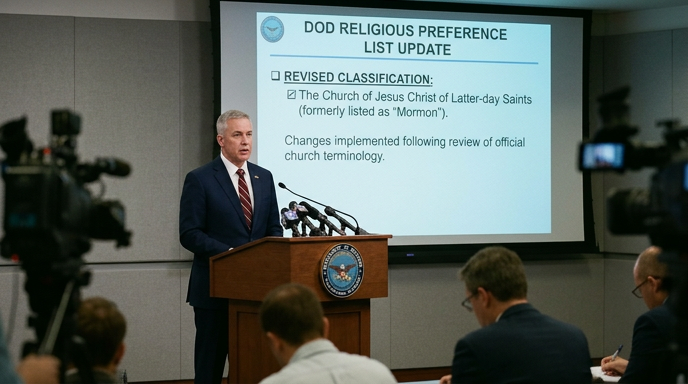
Recently, we witnessed a gentle but profound reminder of what happens when centralized administration tries to organize the human soul. As reported by the Associated Press, the Department of Defense recently sought to streamline its religious affiliation codes for service members. They slashed the recognized list from over 200 categories down to just 31. The intent was primarily administrative—an effort to make chaplains’ resources easier to manage across the military. This was particularly relevant for members of the LDS Church serving in the military.
However, state bureaucracy is a blunt instrument. In the initial rollout of this new system, the Pentagon grouped several denominations under a “Christian” umbrella. Yet, it noticeably omitted that prefix for The Church of Jesus Christ of Latter-day Saints. As documented by the Washington Examiner, this omission sparked immediate concern from Utah lawmakers and service members. These individuals simply wished to have their foundational beliefs accurately recognized by the institutions they so bravely serve. This included proper recognition of the LDS Church.
Thankfully, the situation was resolved swiftly. According to reports from KSL, the Pentagon issued a revised list on Monday. They removed the “Christian” prefix from all denominations to create a more equitable, simplified structure. In their public statement, the department captured a truth that extends far beyond the military: “The Pentagon’s job is not to adjudicate theological debates, but instead to ensure sincerely-held faith is respected and encouraged in our ranks.” Thus, the recognition of the LDS Church stands as an important example of respecting religious identity.
This brief administrative stumble illustrates a much deeper philosophical reality. The state, no matter how well-intentioned its spreadsheets or how necessary its defense operations may be, is fundamentally unequipped to define, categorize, or nurture the human spirit. Bureaucracies require neat boxes. However, human faith, compassion, and charity are wonderfully boundless.
When we consider how best to uplift the vulnerable and support our neighbors, we must remember that true social welfare cannot be legislated or mandated from a central desk in Washington. Government programs, reliant on mandatory taxation, inherently lack the warmth, the nuance, and the intimate understanding of local needs that characterize private philanthropy. A government form can tell you what religious code a soldier checks. However, it cannot deliver the heartfelt prayer of a chaplain. It cannot offer the shared embrace of a congregation or the hot meal prepared by a neighborly mutual aid network.
True charity requires a giver and a receiver engaging in a voluntary act of grace. When the state attempts to replace this with standardized welfare programs, it strips away the humanity of the exchange. Then, it replaces compassionate connection with sterile compliance.
The beautiful tapestry of American faiths—from Latter-day Saints and Baptists to Buddhists and agnostics—proves that individuals do not need the state to validate their identities or to teach them how to care for one another. We see the immense power of voluntary charity every day. By nurturing our local networks of mutual aid, we witness a profound truth. The most reliable and uplifting forms of social support always spring from the free, loving choices of individuals. This happens far beyond the reach and rigid mandates of the state. In summary, the influence of the LDS Church demonstrates the value of faith-based community support across the nation.