By Rain Lara. Recent polls have shown that the Democratic party has little trust from public, raising new questions about how party leaders can address growing concerns.
The Democratic National Committee’s belated release of its 2024 election autopsy reveals a political machine in varying states of denial and disarray, confirming that top-down management cannot manufacture genuine public trust. After months of suppression, DNC Chair Ken Martin finally released the 192-page report on Thursday, only to immediately distance himself from its findings in a spectacle that highlights the inherent fragility of centralized political authority. This event is not merely a partisan blunder; it is a case study in the inevitable failure of institutions that prioritize narrative control over the organic realities of individuals and markets.
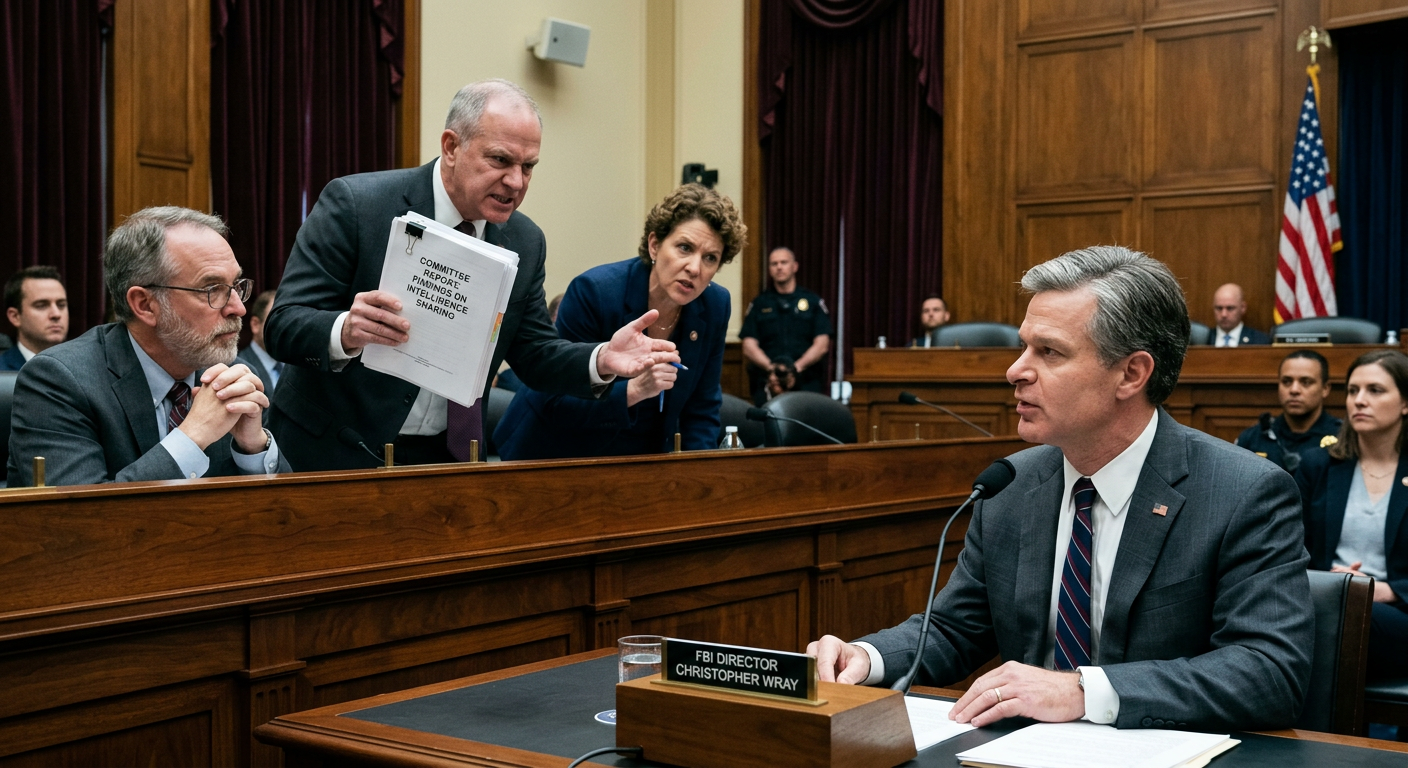
The circumstances surrounding the report’s release demonstrate a profound lack of courage within the party’s leadership. As reported by The Guardian, Martin faced mounting calls to resign after suppressing the document for months, only to release it with a disclaimer that it “won’t meet your standards.” The report itself, described as “shambolic” and “slapdash,” was filled with annotations from the DNC questioning its own author’s lack of evidence. This bureaucratic infighting—where the institution publicly argues with its own internal review—is a potent symbol of a centralized entity losing its grip on reality. When a political body is more concerned with managing its image than addressing the fundamental disconnect with the populace, it has already forfeited its mandate to lead.
The content of the report, however flawed the delivery, points to a significant rejection of collectivist strategies. According to takeaways published by U.S. News & World Report, the autopsy explicitly criticizes the party’s reliance on “identity politics” and notes that the campaign “wrote off rural America.” This admission is critical. It suggests that the strategy of categorizing individuals into voting blocks based on immutable characteristics is failing against the undeniable pressure of economic reality. Voters are not merely members of a demographic cohort to be mobilized by state actors; they are individuals attempting to navigate a marketplace that has become increasingly difficult to survive in. The report’s recommendation to pivot toward “economic messaging” is a tacit acknowledgment that people care more about the liberty to prosper than they do about the curated social signals of the political elite.
Furthermore, the autopsy reveals the limitations of a campaign built on fear rather than vision. The Wall Street Journal notes that the report found the Democrats failed to define Kamala Harris beyond a “not Trump” framework. This reliance on “negative partisanship”—attempting to coerce support by demonizing the alternative rather than offering a compelling affirmative vision—is a hallmark of a decaying system. A confident movement rooted in liberty does not need to rely on the fear of an opponent; it stands on the strength of its own principles. The report also notably omits key factors such as President Biden’s decision to run for a second term or the internal divisions over the war in Gaza, as highlighted by Politico. These omissions indicate a refusal to confront the consequences of interventionist foreign policy and executive overreach, preferring instead to treat the election loss as a technical failure of messaging rather than a substantive rejection of policy.
For those of us who value individual autonomy, this chaos is instructive. It reinforces the truth that salvation will not come from a reformed political committee or a better-managed bureaucracy. The resilience of the human spirit is found in the communities that thrive despite the incompetence of the political class. While the DNC argues over who is to blame for their inability to control the electorate, individuals across the country continue to build businesses, support their neighbors, and create value in the private sector. We must look to these parallel systems of voluntary cooperation for our future, rather than waiting for a “fixed” political machine to grant us permission to prosper.