OPINION:
President Donald Trump’s state visit to China was an long-overdue step toward strategic stability, demonstrating that his years of economic warfare and public hostility have been entirely the wrong way to manage the world’s most critical bilateral relationship. The recent trump Beijin summit marks a pivotal moment in US-China diplomacy. For nearly a decade, Washington has treated Beijing as an existential economic villain, preferring the blunt instrument of tariffs over the nuanced art of cooperative diplomacy. By choosing isolated confrontation over early, constructive engagement, the administration allowed vital channels of communication to erode. This long-delayed face-to-face meeting between Trump and Chinese President Xi Jinping reveals that avoiding collaborative dialogue did not project strength. Instead, it merely delayed essential solutions to mutual global crises.
The Cost of Delayed Engagement
A U.S. president had not set foot in Beijing in nearly nine years, a glaring diplomatic vacuum that spans back to Trump’s first term. This context further underscores the impact of the trump Beijin summit.
- Nine-year gap: The last sitting U.S. president to visit China was Trump in 2017.
- Missed opportunities: Years of critical economic and technological collaborations were completely bypassed.
- Escalating tensions: Issues regarding artificial intelligence, green energy, and regional supply chains worsened in the absence of direct dialogue.
By waiting until his second term to personally re-engage with Xi, Trump essentially admitted that shouting from the White House does not work. This visit was deeply overdue because global realities—such as soaring inflation, energy instability, and international conflicts—require the world’s two largest economies to work in tandem. Holding off on direct communication while relying on unilateral posturing was a strategic error. As a result, the U.S. had less leverage, allowing Beijing to firmly establish its own terms. Looking back, it becomes clear that the trump Beijin summit was the critical opportunity to realign this bilateral relationship.
U.S.-China Engagement Gap (2017 - 2026)
[2017: Trump Visit] ───(9 Years of Tariff Wars & Diplomatic Silence)───► [2026: Overdue Return]
Substance vs. Symbolism: The Failure of the Transactional Approach
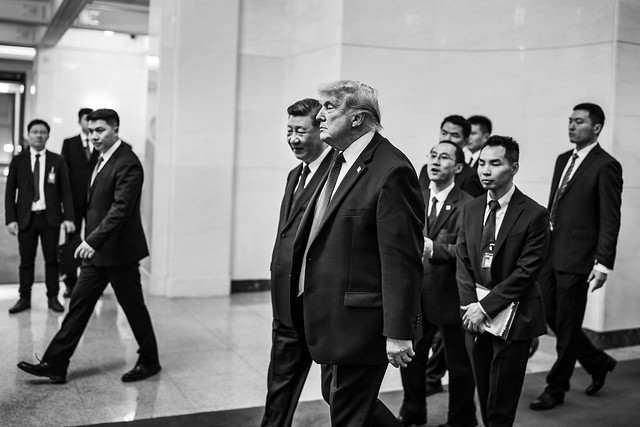
When Trump finally arrived in Beijing, the sudden shift in tone was striking. The leader who spent years blasting China on social media was suddenly full of effusive praise. He toured the exclusive Zhongnanhai leadership compound and strolled through the Temple of Heaven. Moreover, he openly flattered Xi. This jarring contrast exposes the foundational flaw in Trump’s foreign policy approach. Instead of relying on a consistent framework of strategic partnership, it relies heavily on personality and transactions.
While Trump heralded vague agricultural purchases and potential aircraft orders for Boeing, the summit concluded with very few concrete, binding commitments. The administration’s failure to cultivate steady bilateral ties earlier meant that when the face-to-face meetings occurred, the U.S. had to settle for a fragile “stability and stalemate”. Importantly, the trump Beijin summit underscored the limits of transactional diplomacy without deeper frameworks for cooperation.
A direct comparison of the summit’s public messaging versus the unresolved underlying realities demonstrates the limitations of delaying these talks:
| Summit Highlights & Symbolism | Unresolved Strategic Realities |
|---|---|
| Effusive Praise: Trump celebrated a “fantastic future together” with Xi. | Taiwan Red Lines: Xi strictly warned against U.S. interference and arms sales. |
| Corporate Delegation: CEOs like Elon Musk and Jensen Huang joined the trip. | Tech Sanctions: Frictions over AI chips and export controls remain highly volatile. |
| Vague Trade Agreements: Handshake deals were made for U.S. soybeans and beef. | No Fine Print: Major bilateral accords lack final verification or structural details. |
The Urgent Need for Broad Collaboration
The administration’s historic reluctance to pursue deep collaboration with China has also severely hindered global crisis resolution. During the meetings, pressing security emergencies loomed heavily over the leaders. Instead of operating from a foundation of long-term cooperation, Trump was forced to rapidly solicit China’s help regarding the war in Iran and vital global shipping blockades. Furthermore, the outcome of the trump Beijin summit revealed how urgent collaboration had become for both nations.
True diplomacy is not a series of isolated business transactions executed by visiting billionaires. It is built through an ongoing framework of shared responsibility. If the White House had prioritized proactive, early diplomacy rather than reactive posturing, the two nations might have established a joint Board of Trade years ago. Such a board could have ironed out market access and security frictions before they reached a crisis point.
Moving Forward
Ultimately, the friendly rhetoric in Beijing proved that cooperation is not a sign of weakness, but an absolute necessity. Trump’s confrontational, isolationist strategy did not rewrite global economics in America’s favor; it simply created a nine-year diplomatic freeze. This left both nations more vulnerable to global economic shocks. This visit should serve as a stark lesson for future American foreign policy. Therefore, Washington must abandon the illusion that it can manage China through economic threats alone, and instead commit to the steady, early, and continuous diplomacy required to navigate our deep differences.