
By E. A. Vicks. This article discusses several important issues relating to how taxpayers fund public projects. It is essential to examine who benefits when taxpayers fund large-scale settlements or compensation programs.
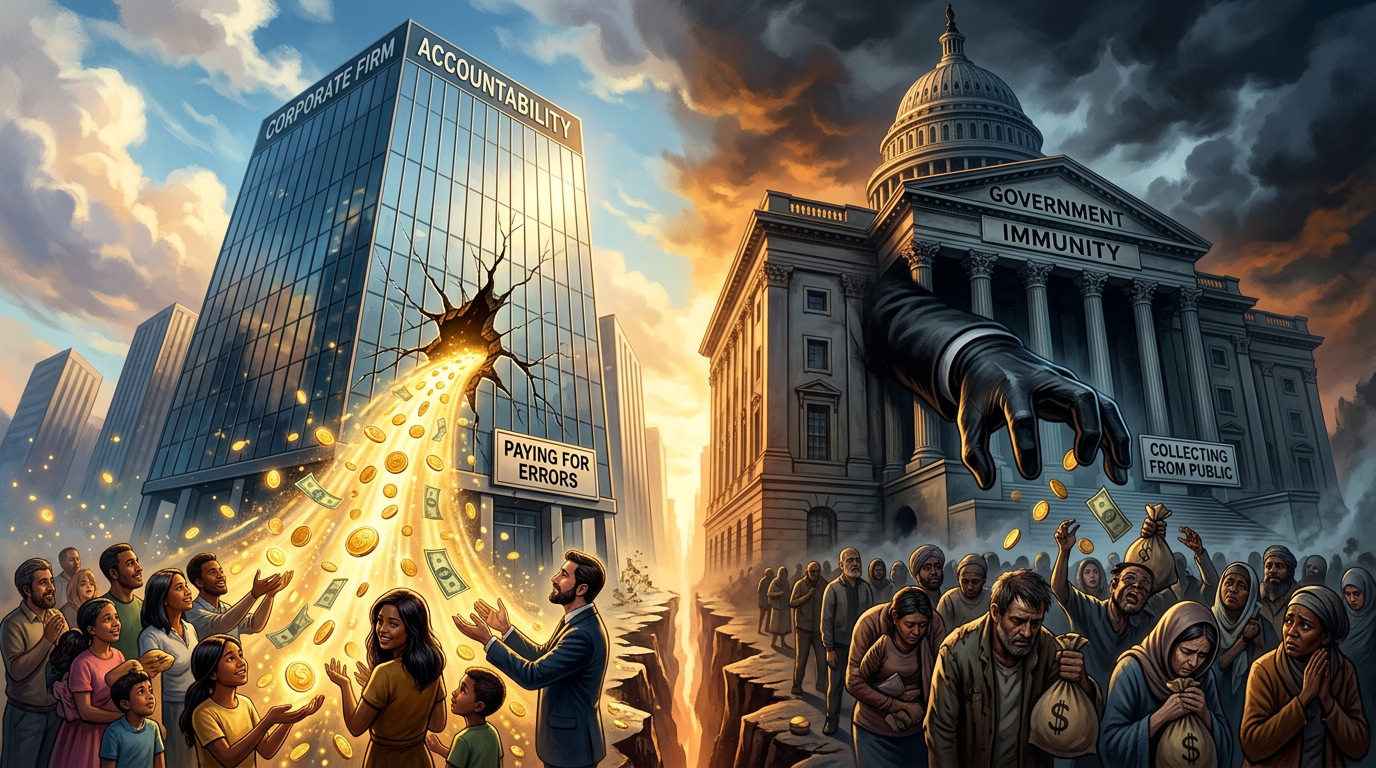
In a functioning marketplace, errors have costs. When a private firm acts negligently, it pays damages from its own capital, signaling a clear economic incentive to correct its behavior or face insolvency. This feedback loop is the engine of competence. However, as we observe the unfolding situation regarding the Department of Justice’s new “anti-weaponization fund,” it becomes evident that the state operates under a fundamentally different set of physics—one where the penalties for government overreach are paid not by the perpetrators, but by the productive citizenry they serve. In truth, it is not officials but taxpayers who fund these settlements.
The latest development in this saga involves Michael Cohen, the former personal attorney to President Trump. As reported by CBS News, Cohen has announced his intention to apply for compensation from this newly established $1.776 billion fund. His argument is technically consistent with the fund’s stated purpose: if the objective is to remunerate those who have suffered from “politically motivated law enforcement tactics,” Cohen posits that his own imprisonment and professional ruin fit the criteria perfectly. He describes his situation as “identical” to the grievances that led to the fund’s creation, positioning himself as a “test case” for the administration’s commitment to non-partisan justice.
While the political irony of a former fixer seeking a payout from the administration he turned against is headline-fodder, the deeper economic reality warrants a more sober analysis. This fund did not emerge from a transparent legislative appropriation, the standard method by which the people’s representatives authorize spending. Instead, as detailed by PBS News, the $1.776 billion pool was established as part of a settlement resolving a lawsuit President Trump filed against the Internal Revenue Service over the unauthorized release of his tax returns.
Here lies the crux of the libertarian critique: the executive branch effectively sued itself, settled with itself, and utilized the general treasury to bankroll the outcome. In effect, this system makes the taxpayers fund the results of internal government disputes.
The structure of this settlement bypasses the checks and balances intended to protect the taxpayer. By utilizing the Judgment Fund—a permanent, indefinite appropriation intended to pay legal judgments against the U.S.—the administration has circumvented the congressional “power of the purse.” The New Yorker notes that while administration officials have compared this to the Obama-era Keepseagle settlement involving Native American farmers, legal scholars and fiscal conservatives alike warn that this creates a perilous precedent. It allows the executive to create massive programmatic spending vehicles without the messy necessity of legislative debate. The broader implications of letting taxpayers fund such programs extend far beyond this case.
For the diligent worker, this arrangement is dispiriting. The funds backing this “anti-weaponization” initiative represent labor diverted from the private economy. Every dollar in that $1.8 billion pot is a dollar that was not invested in a small business, not saved for a child’s education, and not spent on voluntary goods and services. Instead, it has been commandeered to settle scores within the political class.
Furthermore, the incentives created by such a fund are perverse. If the government can simply tap the taxpayer to pay for its “weaponization” errors, the individual actors responsible for those errors face no material consequence. The prosecutor who overreaches, the bureaucrat who leaks, and the official who abuses power do not lose their pensions or their property. The cost is socialized, spread thinly across the millions of Americans who wake up early, work hard, and pay their taxes faithfully.
As PBS News further documents, the fund has sparked significant backlash even among Senate Republicans, who expressed frustration that such a massive liability was created without their input. This bipartisan unease highlights a recognition that the “rule of law” is being supplanted by the “rule of settlements,” where justice is transactional and funded by third parties—the taxpayers—who were never party to the dispute. In summary, the mechanism by which taxpayers fund these policies remains contentious.
Whether Michael Cohen receives his payout is, in the grand scheme, a secondary concern. The primary concern is the precedent of a government that insulates itself from the consequences of its own power, sending the bill to the very people it claims to protect. True diligence requires us to look past the political theater and guard the fruits of our labor from becoming a slush fund for state errors.