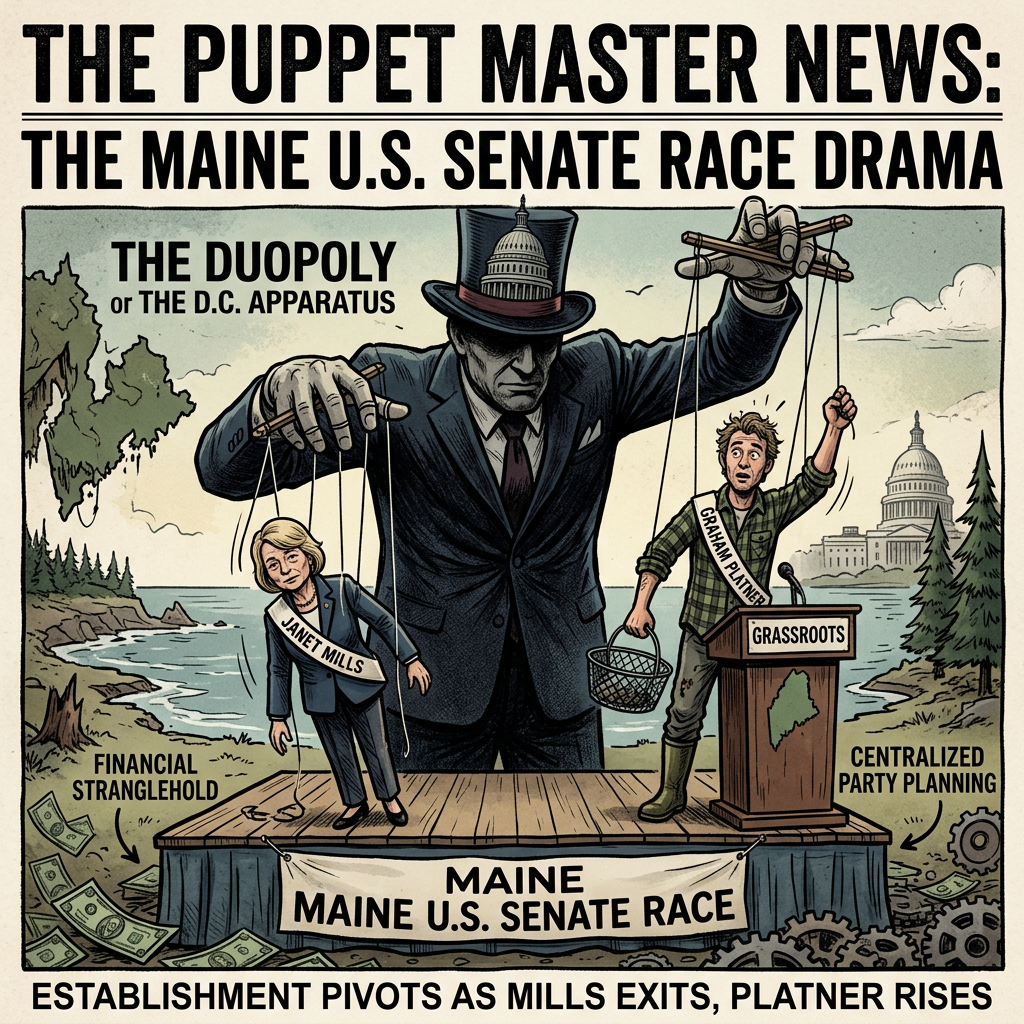
The sudden exit of Maine Governor Janet Mills from the U.S. Senate race—facilitated by the financial stranglehold of the Democratic machine and the rise of “insurgent” Graham Platner—is a textbook example of why the two-party duopoly is a failing enterprise.
To the Libertarian observer, this isn’t a story about “running out of money.” It is a story about the toxic intersection of centralized party planning and the cult of personality. Chuck Schumer’s attempt to hand-pick a candidate from Washington D.C. failed because the modern political economy doesn’t value governance; it values the “populist” brand.
Platner, an oyster farmer with a trail of controversial digital footprints and ideological inconsistencies, is being hailed as a “grassroots” hero. Yet, as soon as the establishment’s preferred veteran (Mills) faltered, the D.C. apparatus immediately pivoted to back the newcomer. This proves that for the duopoly, principles are secondary to the raw pursuit of a 51-vote majority.
While Democrats and Republicans fight over who can better “protect democracy” through state-funded mandates and protectionist trade rhetoric, Libertarians offer the only real alternative: decentralization. Whether it’s Mills’ careerism or Platner’s firebrand socialism, both paths lead to more federal overreach. Maine deserves more than a choice between two flavors of statism. It deserves a market for ideas where the “financial resources” of a party leader don’t dictate the options on the ballot.